By: Atef Mahmoud Dobal, Researcher in Political Science
Executive Summary
This paper examines the water scarcity crisis in Burkina Faso as a model of environmental and developmental complexity in the African Sahel region. It begins by establishing the link between drought and climate change, demonstrating that rising temperatures exacerbate evaporation rates and progressively intensify drought events. The paper argues that Africa, despite its limited contribution to global emissions (not exceeding 4%), is among the most vulnerable regions to the consequences of climate change — particularly the Sahel, which is experiencing declining rainfall rates and accelerating degradation of soil and rivers.
On the water resource front in Burkina Faso specifically, the paper reveals that total renewable water resources amount to approximately 17.5 km³ per year; however, most waterways are seasonal and dry up during arid months, while the agriculture and livestock sector accounts for 86% of total water consumption. The climate crisis has been compounded by massive waves of internal displacement — recording a 1,200% increase in the number of internally displaced persons since 2018 — leading to a sharp decline in access to safe water by up to 40% in some areas, with women and girls bearing a disproportionate burden.
In response to these challenges, the government adopted the Integrated Water Resources Management (IWRM) approach through two phases (2003–2009) and (2010–2015), before launching the National IWRM Program in 2016, which is financed by international partners at a rate exceeding 55%. The paper concludes that this approach, despite its institutional development, remains contingent on translating it into actual investments in water infrastructure and strengthening communities’ climate resilience. It affirms that drought has become a structural risk requiring integration into the core of development policies, rather than merely temporary relief responses.
Introduction
The phenomenon of drought constitutes one of the most prominent phenomena associated with climate change; its impacts transcend the environmental dimension, transforming into a pressure factor that reshapes the equations of food security, social stability, and development pathways. In the African Sahel region, drought emerges as a recurring structural phenomenon that interacts with limited natural resources, heavy reliance on rain-fed agriculture, and economic and institutional vulnerability. Consequently, water management becomes a pivotal issue that is not limited to securing water supplies but extends to building resilience against climatic shocks. In this context, the case of Burkina Faso represents a significant model for the complexity of the relationship between climate change and resource management, where environmental pressures intersect with overlapping developmental and security challenges. This situation necessitates the adoption of adaptive approaches that transcend traditional responses toward more integrated and sustainable policies for managing water scarcity.
Methodology:
The paper adopts a descriptive-analytical methodology grounded in a review of secondary literature and sources. It draws on reports from international organizations (such as the United Nations, the IPCC, and NIDIS), as well as hydrological and statistical data on water resources in Burkina Faso, alongside regional studies on the African Sahel. These inputs are then employed within an analytical framework that links climatic variables -declining rainfall and rising temperatures- to economic, social, and security dimensions, culminating in an assessment of the government’s Integrated Water Resources Management policy. This makes the methodology, at its core, a case study from which broader lessons are drawn for application in similarly fragile contexts.
Results:
- Drought as a Structural Phenomenon, Not an Emergency Drought in the African Sahel and Burkina Faso is no longer a sporadic climatic event; it has transformed into a cumulative structural risk that reshapes the relationship between populations and natural resources. This necessitates its integration into the core of development planning, rather than addressing it through emergency response tools.
- Converging Crises Multiply the Consequences of Water Scarcity The water crisis in Burkina Faso does not stem from climatic factors alone, but from their intersection with economic fragility and excessive dependence on rain-fed agriculture and pastoralism, compounded by massive waves of internal displacement that have intensified pressure on an already deteriorating water infrastructure, leading to a decline in access to safe water by up to 40%.
- Over-Reliance on a Single Sector Deepens Vulnerability The agriculture and livestock sector’s consumption of 86% of total water withdrawals means that any disruption to water resources constitutes a direct threat to food security and the livelihoods of the majority of the population. This makes diversifying sources of income and improving water use efficiency a fundamental condition for reducing vulnerability.
- Integrated Management is a Promising Framework, but Insufficient Alone Although the Integrated Water Resources Management (IWRM) approach represents a positive institutional shift, its practical effectiveness remains contingent on translating it into tangible investments in water storage and harvesting infrastructure, and on reducing dependence on external funding, which currently exceeds 55% of the program’s budget.
- The Most Vulnerable Groups Bear the Greatest Burden The paper reveals that women and girls bear the heaviest burden of the water crisis through water-fetching duties and lengthy waiting times, depriving girls of access to education and exposing women to security and social risks. Data further indicate a sharp rise in waterborne diseases in displacement camps, placing an already exhausted health system under challenges that exceed its operational capacity.
Discussing:
- What is the “drought”?
The United Nations defines climate change as long-term shifts in temperatures and weather patterns. These shifts can be natural, owing to variations in the solar cycle or large volcanic eruptions. However, since the nineteenth century, human activities have been the primary driver of climate change, primarily due to the burning of fossil fuels such as coal, oil, and gas, and the resulting generation of greenhouse gas emissions, which act as a barrier trapping the Earth and preventing solar heat from escaping, thereby causing a rise in temperatures.
The average surface temperature of the Earth is now approximately 1.42°C higher than it was in the late nineteenth century, specifically prior to the industrial revolution. The period from 2015 to 2024 was the warmest on record. Climate change does not exclusively signify rising temperatures; rather, this increase is a precursor to interconnected global impacts, including: water scarcity, severe fires, rising sea levels, floods, melting polar ice, catastrophic storms, declining biodiversity, and severe drought.[i]
The US National Integrated Drought Information System (NIDIS) defines drought generally as a deficiency in precipitation over an extended period—lasting for one or more seasons—resulting in a shortage of water resources for the region. Drought is often characterized as a “creeping phenomenon,” as its impacts manifest gradually across various sectors and operate on multiple timescales. If the weather patterns leading to drought persist for a few weeks or months, it is classified as “short-term drought.” Conversely, if it persists for more than six months, it is considered “long-term drought.” [ii] Several types of droughts have been identified, which can be summarized as follows:
- Agricultural Drought: Describes the impact of drought on agricultural crops.
- Ecological Drought: Occurs when natural ecosystems are impacted by drought.
- Hydrological Drought: Occurs when water supplies to a region decrease.
- Meteorological Drought: Occurs when dry weather patterns dominate a region.
- Socioeconomic Drought: Occurs when drought impacts the supply and demand of various commodities.[iii]
What is the relationship between drought and climate change?
Rising temperatures increase drought through several mechanisms: first, they increase the rate of water evaporation from the soil and transpiration from plant leaves, leading to soil desiccation. As high air temperatures absorb this water, transforming it into atmospheric water vapor through a process known as evapotranspiration, this vapor is transported to other regions, causing heavy rainfall. Increased air temperatures not only encourage the formation of drought conditions but also intensify their severity; what might have been a mild or moderate drought becomes more severe due to increased evaporation under elevated temperatures.
According to a 2021 report issued by the Intergovernmental Panel on Climate Change (IPCC), with every increase of 0.5°C (0.9°F) in atmospheric temperature, notable increases in the severity and frequency of drought events will occur in some regions. The report further indicates that severe agricultural and ecological drought events that used to occur once every 10 years are now 1.7 times more likely to occur than they were between 1850 and 1900, before humans significantly impacted the climate.[iv]
Impact of Climate Change on the African Sahel Region
Despite the limited contribution of the African continent to the phenomenon of climate change on a global level, with its contribution not exceeding approximately 4% of total global emissions, it is considered one of the world’s most vulnerable and sensitive regions to the repercussions of this change. The Sahel region in Africa represents one of the areas most exposed to the effects of climate change, which have not been limited to disrupting the ecological balance and the appearance of drought waves and disruption of rainfall patterns, but have extended to include overlapping political, economic, and social dimensions.
The African Sahel region is considered one of the geographical regions with unique environmental and climatic characteristics within the African continent. This region is located within the semi-arid zone separating the northern part of the African continent and the Sahara Desert to the north, and the savanna regions to the south. The African Sahel extends longitudinally from the Red Sea in the east to the Atlantic Ocean coasts in the west for a distance estimated at approximately 5,000 kilometers, while it extends latitudinally from the southern parts of the North African countries to the northern borders of the African jungles, with a longitudinal area approximating 21,930 square kilometers, and between the latitudes of 12 and 20 degrees north of the equator. Thus, it is considered one of the largest geographical regions in the African continent.
Declining precipitation rates and rising temperatures have contributed to accelerating the pace of soil and river desiccation; the severity of drought has increased by more than 230% during the past five years. This has been directly reflected in the deterioration of agricultural production and the inadequacy of food supplies. Consequently, this has led to recurring waves of famine, rising unemployment rates, the widening scope of poverty, and increased debt burdens, in addition to deepening manifestations of social marginalization within the region’s countries. Furthermore, the persistence of the phenomena of drought and desertification has contributed to the exacerbation of the food security crisis, which has negatively impacted the resilience of local communities, particularly those that depend fundamentally on limited natural resources.
Additionally, climate change has clearly affected livestock rearing patterns by reducing grazing and hunting areas, leading to the escalation of competition and conflicts over water resources, whether in terms of controlling water sources or competing over their quantity and quality. These factors combined have contributed to increasing pressures on food security in the region; data indicate that by 2019, drought waves resulted in approximately 10.8 million people suffering from food insecurity in the African Sahel region as a whole.[v]
The Drought Crisis in Burkina Faso
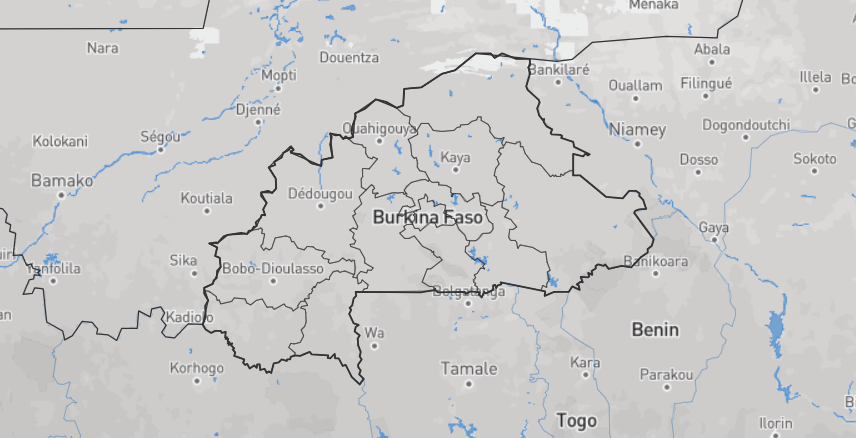
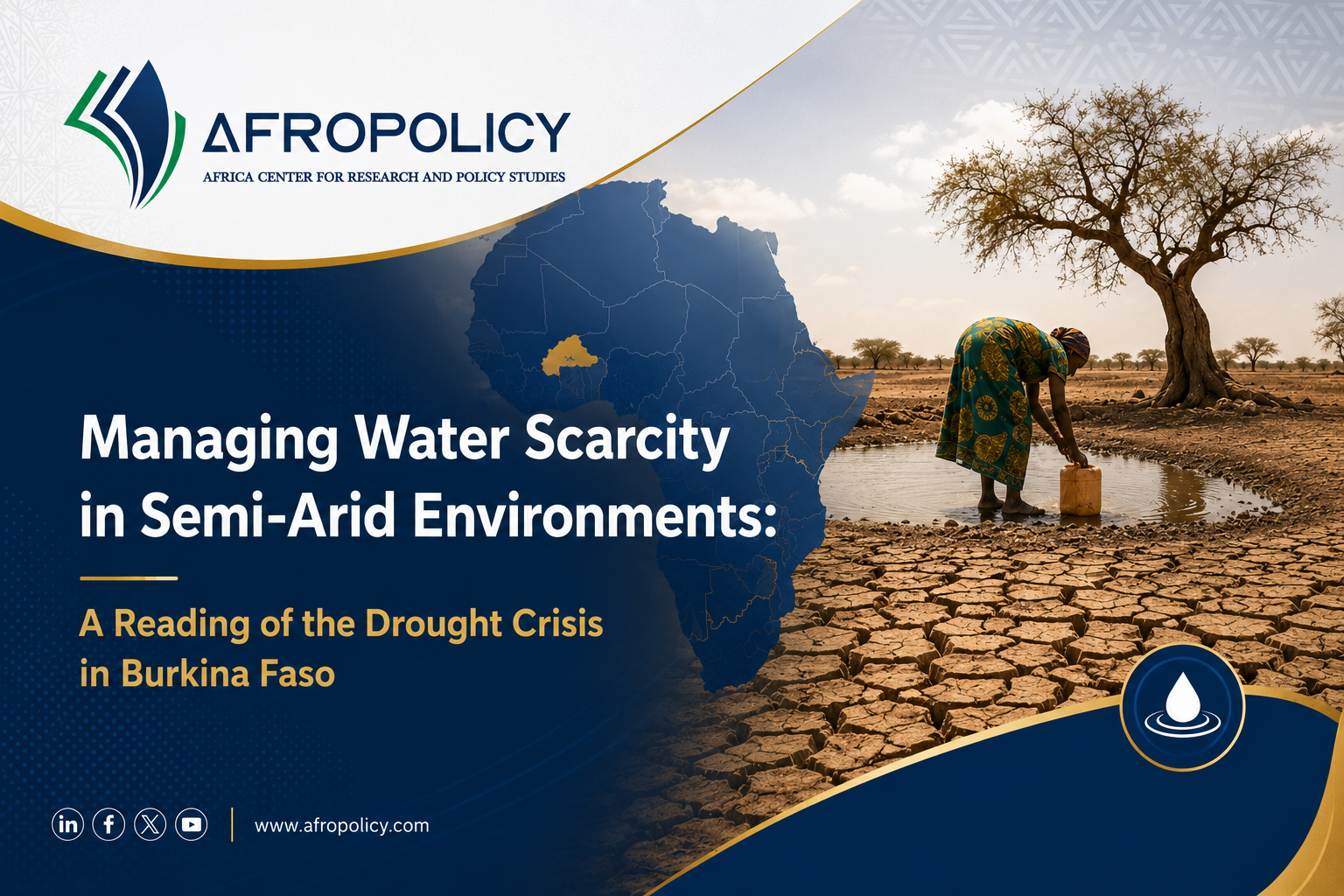
Burkina Faso is experiencing a complex water crisis wherein climatic factors intersect with security tensions, creating a complicated humanitarian situation. According to field reports, the escalation of armed violence in the Sahel region since the end of 2018 has caused unprecedented waves of mass displacement, with the country recording a 1,200% increase in the number of internally displaced persons (IDPs). This sudden population pressure coincided with severe environmental degradation resulting from climate change, manifested in recurring droughts striking a country where 80% of its population relies on agriculture and pastoralism, making the acquisition of a “drop of water” a daily struggle for survival.
The massive influx of displaced persons into host communities—which themselves suffer from chronic poverty—has exceeded the carrying capacity of the dilapidated water infrastructure. Data indicate that access rates to safe water have decreased by up to 40% in some urban and rural areas due to the excessive consumption of limited hand pumps and wells. The impact of this water resource deficit is not limited to thirst alone but extends to the disruption of health and educational services, as schools and health centers are forced to operate in an environment lacking the minimum standards of environmental sanitation, thereby exacerbating the fragility of the overall situation.
The drought crisis casts its shadow disproportionately on the most vulnerable groups, specifically women and girls who bear the primary burden of water fetching. Women are forced to wait for long hours in extended queues to obtain quantities insufficient to meet basic needs, exposing them to security and social risks and depriving girls of access to education. From a health perspective, the scarcity of potable water and overcrowding in displacement camps have led to a marked increase in waterborne diseases such as diarrhea, placing the already exhausted health system before challenges exceeding its operational capacities and threatening the occurrence of epidemic disasters unless the situation is rectified.
What are the water sources in Burkina Faso? And how have they been affected by drought?
Total internal renewable water resources are estimated at approximately $17.5$ km³/year, distributed in close proportions between groundwater, contributing $9.5$ km³/year, and surface water, providing $8$ km³/year. The water resource network in Burkina Faso is characterized by the complexity of its paths and the multiplicity of its basins that transcend national borders. The country is divided hydrologically into three main water basins: the first and largest is the Volta Basin, which constitutes the vital artery of the country, covering up to 63% of the total area, concentrated in the central and western regions. This basin includes the river system of the “Mouhoun,” “Nakambé,” and “Nazon-Pendjari,” whose paths terminate by converging within the territory of the Republic of Ghana. The second basin is the Niger Basin, occupying approximately 30% of the total area, where it plays a pivotal role in discharging water from the eastern and northern regions before flowing into the main channel of the Niger River. Finally, the Comoé Basin comes with a limited coverage percentage of 7% in the southwestern part, where its waters cross the territory of Côte d’Ivoire, reaching the final outlet in the Gulf of Guinea, highlighting the geopolitical importance of these transboundary water resources.
Water resources in Burkina Faso are subject to severe climatic fluctuations and seasonal oscillations that periodically reshape the country’s water map. While the average annual precipitation is recorded at approximately 748 mm, this figure does not accurately reflect the actual hydrological reality, given the temporary seasonal nature characteristic of most rivers and waterways, the vast majority of which dry up during the dry months, except for some limited ranges in the far southwest. The severity of the water resource system in Burkina Faso becomes apparent when analyzing drought scenarios; access to surface water sharply declines by approximately 46%, reaching only $4.3$ km³/year, which places national water security under direct pressure and specifically threatens the continuity of pastoral and agricultural activities upon which the backbone of the national economy depends.[vi]
Wetlands in Burkina Faso, extending over an approximate area of 1,800 km², play a vital and crucial role in maintaining ecological balance and recharging aquifers; however, they remain vulnerable to continuous erosion due to climatic changes and human pressure. Based on accumulated climatic data, the country is classified within regions of “high risk” for water scarcity, indicating the existence of a periodic climatic pattern foreshadowing the occurrence of severe and impactful droughts at an average rate of once every five years. This classification represents not merely an environmental challenge but imposes a technical reality necessitating the integration of drought risks into all stages of developmental project planning and the design of infrastructure to be more flexible and resilient, along with the necessity of adopting management strategies that maximize surface water storage efficiency and develop groundwater utilization techniques as a strategic safety valve to confront years of water scarcity.[vii]
Data related to water withdrawal reveal an absolute dominance of traditional activities over available resources, reflecting an economic structure entirely dependent on water to secure food and basic needs. According to documented statistics, the irrigation and livestock rearing sector consumes the largest share of resources at 690 million cubic meters, equivalent to 86% of total annual water withdrawal. Conversely, domestic use comes in second place with a consumption volume of 104 million cubic meters, a percentage estimated at 13%, while the share of the industrial sector remains extremely negligible, not exceeding 6 million cubic meters, equivalent to only 1% of the total. This sectoral distribution highlights the large gap between agricultural needs and other developmental needs, and confirms that any disruption in water resources resulting from drought directly and primarily affects food security and the livelihoods of the vast majority of the population who depend on agriculture and pastoralism as a primary source of income.
What is Ouagadougou’s policy for dealing with the drought crisis?
Burkina Faso has adopted a comprehensive approach to water resource management to enhance good governance and ensure the sustainability of its water resources. This approach aims to bring about a structural and behavioral transformation in water management, and this trend began to crystallize through a strategic partnership with the Kingdom of Denmark (via the DANIDA agency). An agreement was signed in March 1999, lasting for thirty-three months, which laid the foundation stone for the transition toward systematic resource management, implemented through two complementary temporal phases:
- First Phase (2003–2009): Focused primarily on structural establishment and capacity building; it included the preparation of institutional and legislative frameworks, and the launching of a national water information system. This phase was also concerned with investing in human capital through training, awareness, and advocacy programs, as well as supporting scientific research and implementing urgent resource protection measures.
- Second Phase (2010–2015): Aimed at transitioning from establishment to actual operation, seeking to activate integrated management mechanisms and convert them into a practiced reality across all water sectors by the end of 2015.
In 2016, the state launched the National Program for Integrated Water Resources Management (NP/IWRM), within a strategic goal of sustainably meeting the freshwater needs of users and ecosystems by the year 2030. The target is to achieve accurate and comprehensive knowledge of national water resources and manage them with high efficiency, ensuring the right of access to drinking water and sanitation services, and supporting the pillars of sustainable development.
This program relies on a mixed financing model combining self-resources and external support. The state budget contributes 22.17%, reinforced by the “Financial Contribution for Water” (CFE) at 22.39%, which is a financing tool reflecting the “beneficiary pays” principle to ensure resource sustainability. Conversely, international technical and financial partners undertake the largest role in financial coverage, at a rate of up to 55.45%.[viii]
Assessing the Effectiveness of Integrated Water Resources Management in Burkina Faso
The drought situation in Burkina Faso reflects a model of what can be described as a “complex environmental crisis,” where the decline in water resources is not related to climatic factors alone, but intersects with economic vulnerability and high structural dependence on agricultural and pastoral activities that consume the largest proportion of water withdrawn annually. This dependence causes any fluctuation in rainfall or decrease in surface resources to directly translate into a threat to food security and livelihoods, especially in light of the seasonal nature of waterways that dry up during long periods of the year. Consequently, drought in the Burkinabè context is not considered an emergency event, but a periodic phenomenon with cumulative impacts that reshape the relationship between the population and natural resources and impose continuous pressures on the state’s capacity to manage scarcity.
In facing these challenges, the government adopted the approach of Integrated Water Resources Management (IWRM) as an institutional framework to reorganize water use and improve its governance, based on developing the legislative structure, building water information systems, and enhancing technical capacities during the foundational stage, then transitioning to the actual operation stage and applying administrative mechanisms at the sectoral level. This shift aims to transcend traditional fragmented management toward an approach that views water as a single economic, environmental, and social resource, allowing for a balance between user needs and the sustainability of ecosystems, while integrating long-term planning considerations and drought risks into developmental policies.
Despite the advanced theoretical framework for adaptation that this approach provides, its practical effectiveness remains contingent upon a set of determinants, most notably the relative dependence on external funding, the continuation of demographic pressures and internal displacement, as well as the limited infrastructure capable of storing water or redistributing it spatially and temporally. Therefore, the success of adaptation strategies does not stop at adopting the IWRM model itself but is linked to the extent of the state’s capacity to convert it into physical investments in water harvesting facilities, improving water use efficiency in agriculture, and enhancing the local resilience of communities most exposed to drought, thereby transforming management from a planning framework into an actual tool for building climatic resilience.
In conclusion,
The drought crisis in Burkina Faso highlights a set of fundamental lessons that transcend the boundaries of the national case to provide a significant model of the nature of climatic challenges in fragile environments. The first of these lessons is that drought is no longer a periodic natural phenomenon that can be managed through temporary relief responses; rather, it has become a structural risk requiring its integration into the core of developmental planning and resource management.
Furthermore, the crisis reveals the danger of excessive dependence on climate-sensitive economic activities, particularly rain-fed agriculture and traditional pastoralism, making livelihood diversification and enhancing water use efficiency a fundamental condition for reducing the vulnerability of communities to climatic shocks. The experience also demonstrates that the intersection between environmental pressures, demographic factors, and security factors can multiply the impacts of drought, transforming it from a resource crisis into a complex humanitarian and developmental crisis. Consequently, effective management of drought in similar contexts necessitates adopting a proactive approach based on building resilience, improving climatic risk management, and enhancing the integration of environmental, food, and social policies to ensure resource sustainability and protect the most vulnerable groups.
[i] United Nations. What is climate change? Retrieved January 9, 2026, from: https://www.un.org/en/climatechange/what-is-climate-change[ii] National Integrated Drought Information System. Drought timescales: Short- vs. long-term drought. Retrieved January 9, 2026, from: https://www.drought.gov/what-is-drought/drought-timescales-short-vs-long-term-drought
[iii] National Integrated Drought Information System. Drought basics. Retrieved January 9, 2026, from: https://www.drought.gov/what-is-drought/drought-basics
[iv] Yale Climate Connections. (2023, May 11). Climate change and droughts: What’s the connection? Retrieved January 9, 2026, from: https://yaleclimateconnections.org/2023/05/climate-change-and-droughts-whats-the-connection/
[v] Bay, B. (2023). Climate change and its impacts on environmental security in the Sahel region. Algerian Scientific Journal Platform (ASJP). Retrieved January 9, 2026, from: https://asjp.cerist.dz/en/article/221839
[vi] CEO Water Mandate. Water Action Hub: Country profile – Burkina Faso. Retrieved January 9, 2026, from:
https://wateractionhub.org/geos/country/35/d/burkina-faso/
[vii] Global Facility for Disaster Reduction and Recovery & United Nations Office for Disaster Risk Reduction. Burkina Faso hazard report. Think Hazard. Retrieved January 9, 2026, from:
https://thinkhazard.org/en/report/42-burkina-faso/
[viii] Global Water Partnership West Africa. (2023, January 18). IWRM in Burkina Faso, from the plan to the programme: Boldness of small steps well monitored. https://www.gwp.org/en/GWP-West-Africa/WE-ACT/Nos-publications1/Revues/mekrou-project-special-newsletter-on-study-trip-niger—burkina/iwrm-in-burkina-faso-from-the-plan-to-the-programme/